I’ve watched oilfield service companies bleed money on software that looked perfect in a demo, then quietly fail the moment a crew hit the field.
It usually does not fail because the UI is bad or the vendor lied.
It fails because the tool was never built for the reality of energy services: rentals + services + consumables, unpredictable schedules, change orders, multi-crew jobs, spotty connectivity, and customers who will dispute anything that is not documented cleanly.
After working with 200+ energy service companies, I’ve seen the pattern clearly. The ones who avoid costly mistakes do not just evaluate features. They ask better questions before they sign.
When we first entered the oilfield software space, I was surprised by how many operators chose platforms built for generic field service and then spent months trying to bend them into something that worked for completions, rentals, or chemical delivery. By then, they had already lost time, credibility with clients, and trust with their own crews.
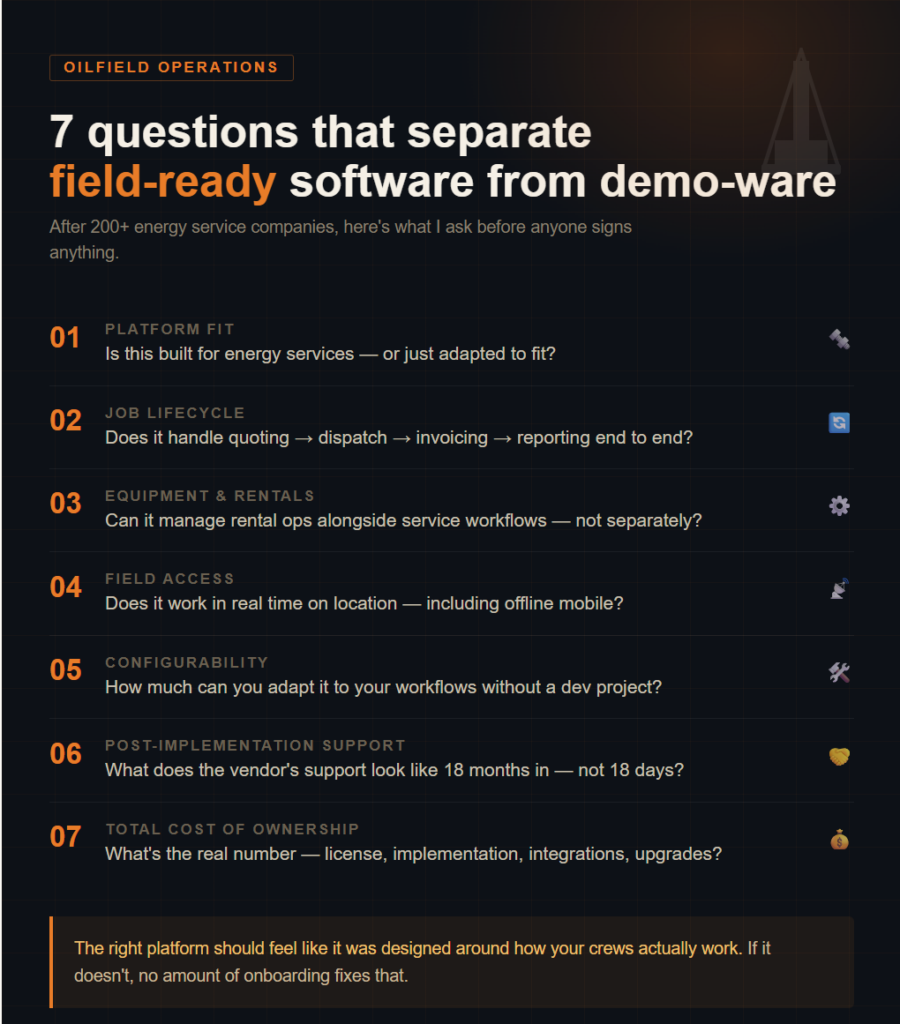
Here are the 7 questions I now consider non-negotiable before final selection of oilfield job management software:
1. Is this platform built for energy services — or adapted to fit?
Generic tools often look capable until operational complexity hits. The gap between “configured for oil and gas” and “designed for it” is enormous.
Ask for proof in workflows, not slides:
- How does it handle tickets with rentals + services + materials on the same job?
- How does it handle redlines, revisions, and customer approvals without breaking auditability?
2. Does it handle the full job lifecycle end to end?
Quoting → dispatching → field execution → invoicing → reporting.
If you are stitching three tools together to close a job, you do not have a system. You have a workaround. And that workaround usually shows up as:
- Duplicate data entry
- Lost context between teams
- Billing delays and disputes
3. Can it manage equipment and rental operations alongside service workflows?
For most oilfield service companies, these are not separate businesses. Your software should not treat them that way.
Ask:
- Can you track availability, custody, and condition in the same flow as the ticket?
- Can you tie rental days, swaps, pickups, and damages directly to billing?