What one West Texas equipment rental company taught us about RFID, oilfield mobile apps, and the gap between a spec sheet and a muddy lease road.
A West Texas equipment rental company called us several months ago with a simple problem. Their equipment was not coming back. It moved from job to job, and at some point, it was just gone.
Not stolen. Not scrapped. Just gone. Years of purchases sat somewhere between three yards and a hundred job sites, and the yard count no longer matched the books.
Equipment lost in the field is equipment nobody bills. Each unit cost them 4 to 5 figures. The owner wanted two things: know where every unit is and know how hard it has worked.
The second part matters. Rental equipment wears out by use, not by age. Two units bought the same week can live very different lives, depending on the jobs they go to. Nobody knew which was which, because nobody had tracked a single unit from purchase to disposal. To measure utilization and life expectancy, you need hours and performance tracking for every unit.
Why the demand is real
Operators are getting bigger and more demanding. They want proof on the invoice: which unit was on location, for how many days, on which job, which well, and which PO.
The money in oilfield services sits in equipment that moves all the time. Rental fleets, pumps, iron, lifting gear… These assets travel from yard to job and back, and some of them never pass a clerk with a clipboard.
So, the demand is clear. Know the unit, know the location, know the days. Bill for all of it.
Why the supply keeps breaking
Every tracking system assumes someone scans the asset at the right moment.
In the field, the person holding the phone is also holding a wrench. They are standing in mud, next to equipment that weighs more than a truck. They will do one scan. They will not do five.
The job comes first, and it has to be done right. Tracking comes second.
So, the real requirement was never “track the equipment.” It was this: identify a heavy asset without moving it, in the dirt, with one hand, by a crew that has better things to do.
![image]()
First answer: QR codes
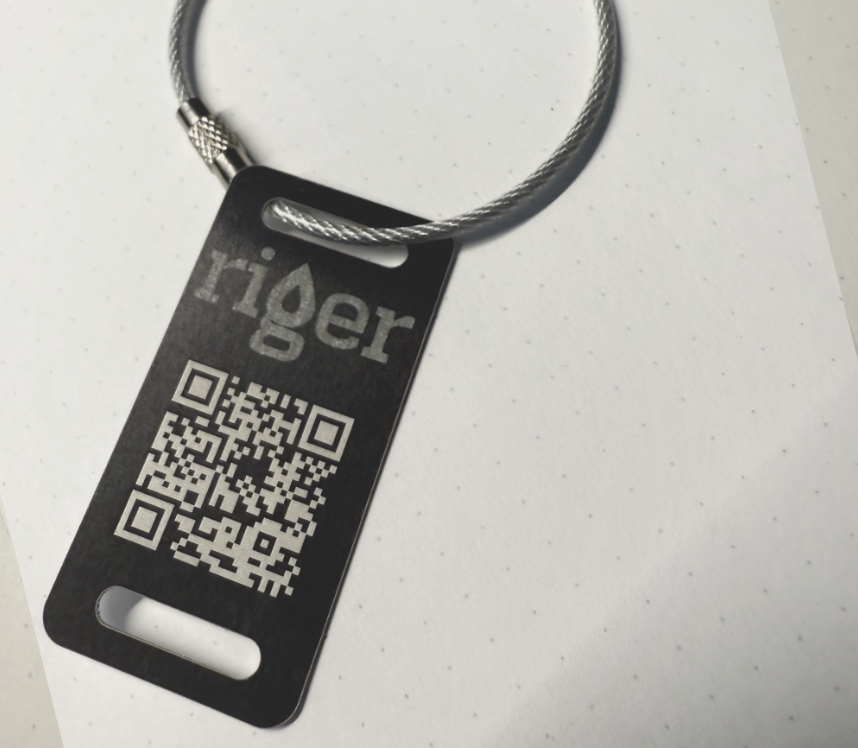
We started with QR codes, also called 2D barcodes. Several per unit, printed large for distance, with a small backup code next to each. A code reads from about ten times its own width, so a large code scans from ten feet.
QR works in the yard. In the field, mud covers the label and a scratched code will not scan. Equipment stacked on a rack hides most of its codes. And the side with the label often faces the ground.
Still, QR was the right technology. It is cheap. Any phone or tablet can scan it. It is easy to replace. We just had to put it where the crew could reach it.
![image]()
Second step: RFID, and the hard questions
RFID comes in two formats. They are not interchangeable.
NFC runs at 13.56 MHz. It reads at about one inch, and most phones read it with no extra hardware. The catch: the phone has to touch the tag. A rugged phone case can block the read. We learned that with the case on, then off.
UHF runs at 860 to 960 MHz. It reads from up to 30 feet with a good handheld. A yard count becomes a walk with the trigger held. The catch: it needs a separate reader, about a thousand dollars each, paired to the phone by Bluetooth. And it reads every tag nearby. Ten tags on a table read as 8, then 9, then 10. Two units parked side by side read as both. The reader needs calibration and some experience.
Long range is fast. It does not know which unit you meant.
We chose tags that carry both frequencies in one body. NFC for a close tap on a single unit. UHF for field and yard counts. Each tag is banded tight to the frame. Anything that hangs loose on oilfield equipment lasts about a day.
The software side was simple. Every code is a digital ID: QR, barcode, NFC, UHF. All of them point to one unit number. A unit can carry a dozen. The choice of technology belongs to the field test, not the spec sheet.
One day on one screen
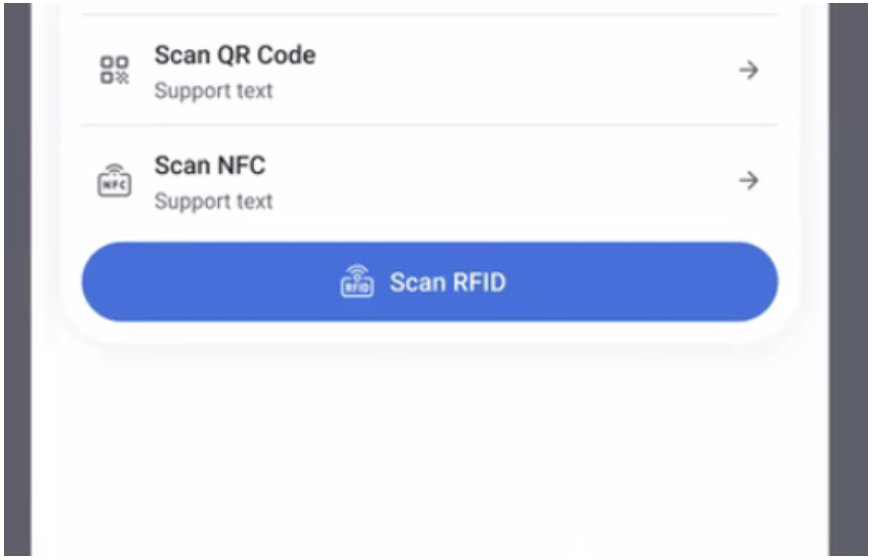
This screen links a tag to a unit (assign digital ID). It sounds small. It is where the whole program works or fails. If a tag lands on the wrong unit, every day billed after that is wrong.
The unit number is the biggest text on the screen. Unit 38 and unit 83 look alike on a rack in the sun. A wrong match is worse than no match. The item description goes smaller, underneath. In a yard with 160 identical units, the description tells you nothing.
One tap adds the RFID chip. No drafts. No save button. No confirmation. We argued about this for an hour. The developers wanted a draft state and a slide to complete. The argument that won: give the technician one button to assign a digital ID, and keep the work as simple as possible.
Large units carry an RFID chip at each end. Scan both, keep one record. The second read is dropped without a message. A popup is a reason to stop working.
It was just small example of development process.
![image]()
What a good oilfield mobile app looks like
The crew checks equipment in, in the field and in the yard. Simple and fast. Any screen that asks the field to think about documents, statuses, or approvals will get skipped.
The most important number is the biggest thing on the screen. Everything else is smaller on purpose.
One action, one tap, and it works offline. Drafts and confirmations belong in the office.
The cloud does the rest in seconds. A manager reviews and approves all movements at the end of the day.
The ID layer does not care about technology. Print QR today, band RFID tomorrow, add a barcode next month. The unit number stays the same.
And the app respects the physics. Heavy equipment does not get turned over for a scan. A phone case blocks NFC. A UHF reader reads too much. Design for the asset as it sits in the dirt, not as it sits in a demo.
The restrictions nobody puts on the spec sheet
Hardware cost adds up fast. Tags for a full fleet plus a few UHF readers is a real line item before any software is involved.
Read rates change with metal, mud, and distance. The same reader gives different counts on the same table.
Phones differ. Most new phones read NFC. Some tablets do not.
Crews change. Whatever the process is, a new hire has to learn it on day one, in the field, without training.
What happens next
Version 2.0 ships next week: NFC and QR on the phone. The UHF reader comes after we see which one survives a yard.
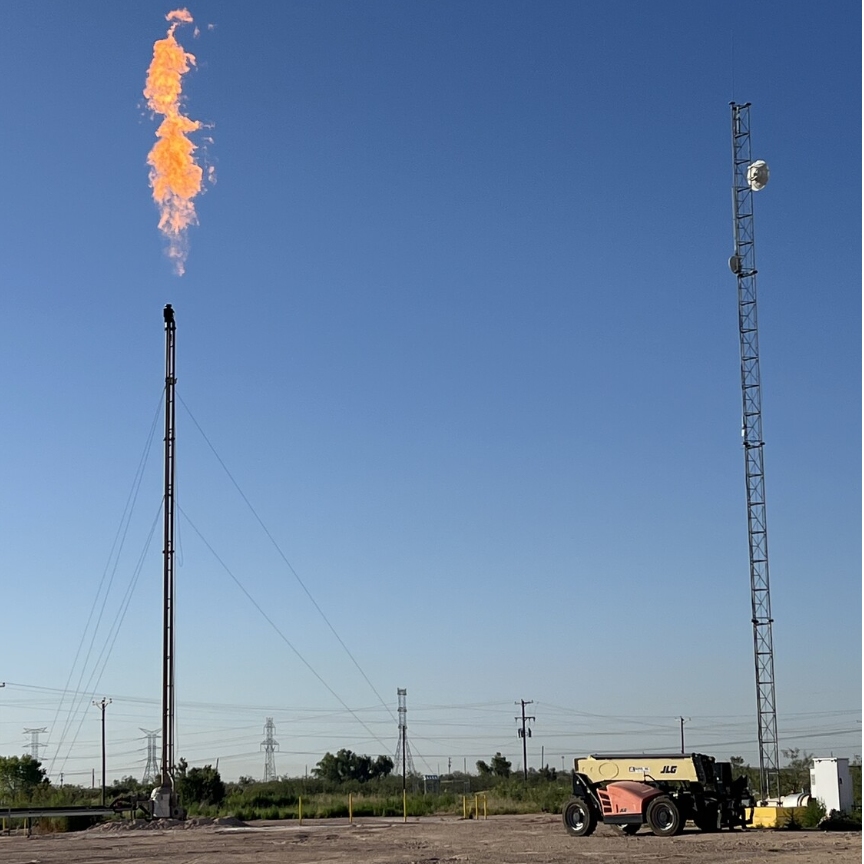
Then the field test. Tags banded to frames, a rack sweep, a tag/chip on each unit, and a pass-through mud and weather. The app will work. The open question is whether a phone and a tag hold up on a unit that just came off location.
Tracking lives or dies where the tag meets the dirt. The software is the easy part.
![image]()
Where we are now
The project took several field trips, multiple design sessions, test runs of several mobile apps, and a lot of searching for the right setup. In the end, it works.
Now comes the field test. Lots of moving parts: mobile, cloud, QR tags, RFID chips, scanners, and the oilfield itself. It is a good problem to work on.