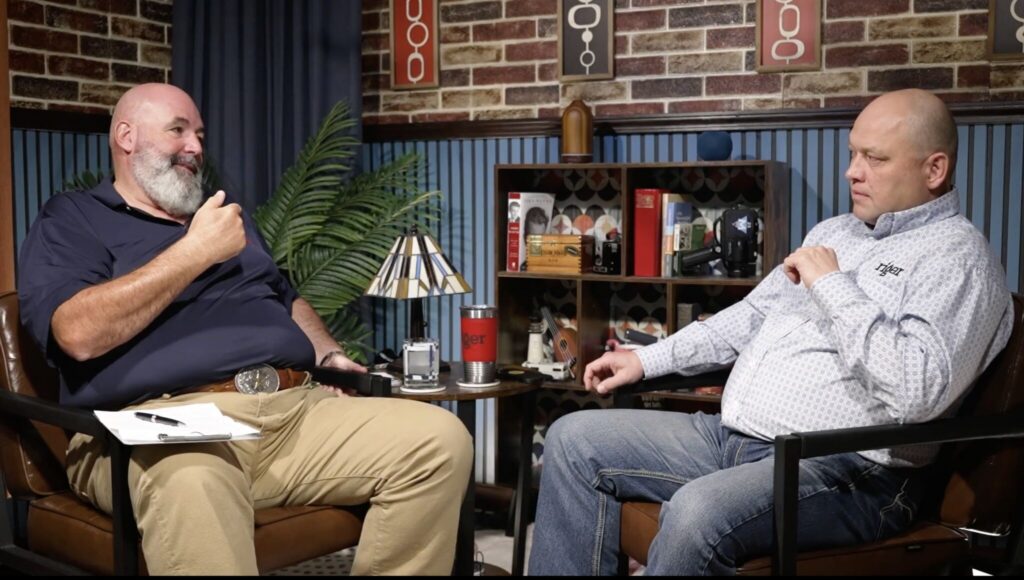
Standardization in oil and gas service companies starts with two things you already have: the way each job moves from person to person, and the list of what you rent and sell. Settle those first, and mobile tickets, integrations and faster invoicing have something solid to run on. That was the advice from RigER CEO Michael Maltsev on episode 129 of the Digital Doers podcast with host Jason Duff and this article is adopted from the podcast.
Watch the full episode.“Standardization is not what oil and gas is famous for,” Michael said.
These are the steps he recommends.
Where paper-based operations slow down
Whiteboards, Excel spreadsheets and paper tickets still run a lot of field operations. Michael has seen a whiteboard wiped clean by the cleaner. He has also seen a company point a camera at its whiteboard so five locations could read it.
He doesn’t blame the paper. “Paper is not a problem,” he said. “Problem is handoff.” The trouble starts when the work passes from one person to the next and has to be processed again at each step.
Why standardization is hard in oil and gas
Two companies can run the same type of equipment at about the same size and still operate in completely different ways. Michael described one company that aims to get the most from its fleet financially, keeping maintenance low and replacing units as they wear out. Another works to extend the life of each unit as long as possible.
“Nothing bad,” he said. “It’s just a strategy.” On the shop floor, though, the two run nothing alike.
Operators add their own rules on top. Offshore rentals, where compliance requirements are strict, show how far this goes. Two identical units can sit side by side in the yard, one with a certification that expires in four months and the other in twelve. Each operator sets its own minimum, so the same unit can qualify for one client’s job and fail another’s.
At one offshore client, technicians used to type a unit number into the computer, find it didn’t qualify, and go back for another one, as many as 25 times a day. Offshore tickets can be huge. The biggest one Michael has seen had 2,000 line items, about 50 pages.
Offshore logistics hold surprises too. Michael found that, on average, one piece of equipment traveled from port to platform three to four times, because the platform had no space to unload it.
Step 1: map how your jobs actually run
When an implementation starts, the RigER team sits down with the client’s subject matter experts and walks through each process together. The questions sound simple:
- Who approves a job, and in what order? Does the client approve first, or management?
- Who is responsible for pricing?
- Who sets the quantities and schedules the job?
In many companies the answers aren’t obvious, and they change over time. Jason described a sign-off he had just seen that went through five different people.
Once clients see their own process laid out, many of them ask the same thing: show us the best practice and how other companies do it. Michael finds most clients open to change, because they want to grow. Even manufacturers starting a rental business have come to RigER to learn how rentals work: how to apply rental fees, how to track equipment, what job preparation looks like and what to charge. For a fuller checklist, see ,
how to prepare your business for a RigER implementation.Step 2: clean up your item list
The second thing to settle is your item list: what each item in your database is called. “Sometimes it takes years,” Michael said.
A client in the Middle East ran its operations in Excel, while Oracle held what it had purchased from different vendors. Each vendor used its own names, types, sizes and classifications, and the result was hundreds of duplicates. RigER removed the duplicates and verified the data while importing it.
Michael said one clear name for each item matters because it affects how documents are built in the system. Our post on
why item naming conventions are mission-critical goes deeper on how to build one.
![image]()
Step 3: track each unit and the rules it has to meet
RigER tracks equipment by serial number. Each unit has its own number and is tracked by location (a client site, your yard or your shop) and by status, such as deployed, ready for rent, needs repair or due for inspection.
Michael sees more clients adding digital IDs to their equipment: barcodes, QR codes and RFID tags, sometimes two of them together. We wrote about
The Equipment That Did Not Come Back. Once the data is in place, client requirements can sit next to it. At that offshore client, the system knows each unit’s certification expiry date and each operator’s requirements for that type of equipment. Technicians now scan a unit or enter its number and see whether it’s qualified for the job. Michael said it saves a lot of time, energy and money.
Step 4: connect the software you already run
Larger companies often have what Michael calls a mosaic of software, or a zoo. Prices get entered in one system, imported into the CRM, then entered again to generate invoices. Every double entry is one more handoff. At one client meeting, a VP of IT concluded the company could replace 15 different software solutions with one.
RigER works in three layers:
- The office, with a cloud system covering sales, operations and field accounting.
- The field, with mobile apps on phones and tablets that work online and offline.
- The boardroom, with operations data sent to Power BI dashboards that show management what happened in the field yesterday.
Michael mentioned integrations with ERP and telemetry systems. Clients also add modules as they need them, such as safety, HR, quality control or incident reports.
Step 5: shrink the time for each process
After go-live, the number one request Michael hears from the most advanced clients is to shrink the time for each process: the quote, the ticket, the invoice. Less time means lower cost. Sometimes it also decides who gets the work.
His example comes from home. After buying a new house, he called three companies about a water softener. One sent a quote in a week, the second in two weeks, and he’s still waiting on the third. “So guess who will get the job?”
Speed is also what lets a company grow. Sales can win more jobs, but without a scalable system, operations become the block. One RigER client grew from one location to six without any changes to the system. They just added more records.