If you work in oilfield services, you already know the answer. But for anyone evaluating whether a piece of software, an equipment rental company, or a service provider can handle their operation, the distinction between onshore and offshore matters enormously – because the two environments impose fundamentally different requirements on equipment, logistics, compliance, staffing, and technology.
This guide explains the key
differences between onshore and offshore oilfield operations, and what those differences mean for the companies that service them.
The Basic Distinction
At the most fundamental level, the difference is location.
Onshore operations take place on land. Drilling rigs, wellheads, production facilities, and service equipment are all accessible by road. Crews drive to the job site. Equipment is hauled on trucks. If something breaks, a replacement part is hours away, not days.
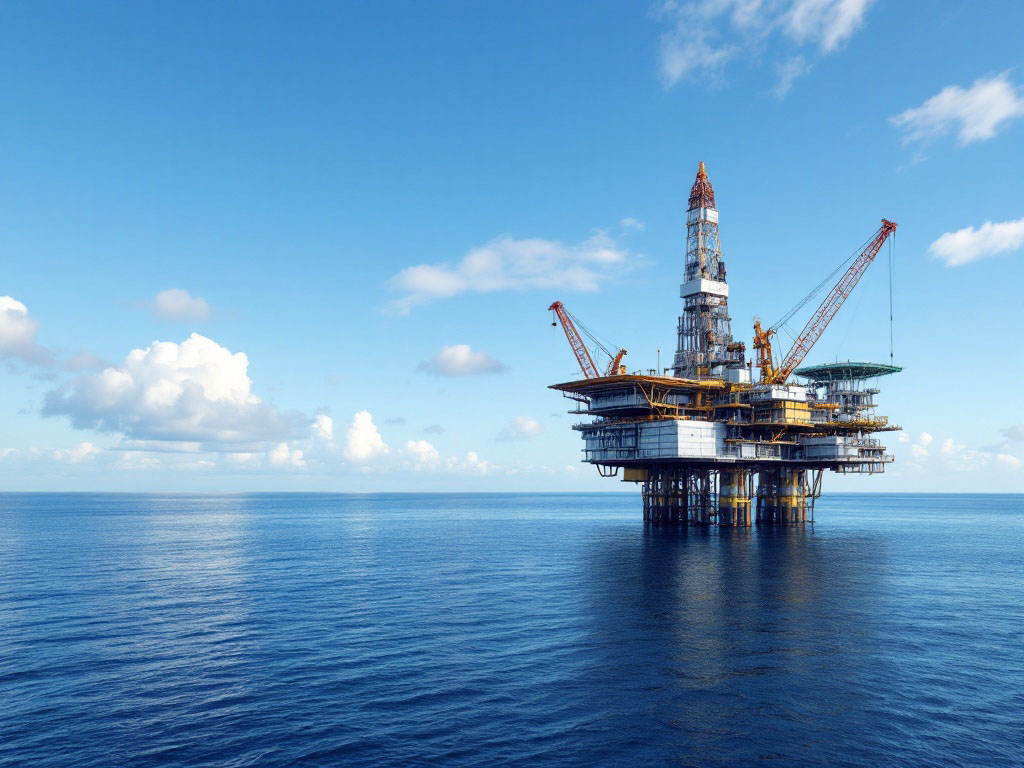
Offshore operations take place in ocean or sea environments — on platforms, floating rigs, or subsea systems built on the continental shelf or in deeper water. Crews fly or boat to the job site. Equipment is mobilized by vessel. If something breaks at sea, the cost and time to fix it are orders of magnitude higher than onshore.
Onshore drilling accounts for approximately 85% of U.S. crude production. Offshore accounts for the remaining 15% – but involves significantly more complex infrastructure, higher costs, and stricter regulatory requirements.
Infrastructure and Equipment
Onshore
Onshore operations use relatively straightforward infrastructure: land-based drilling rigs, pump jacks, wellheads, pipelines, and surface production facilities. Because everything is land-accessible, setup is faster and less expensive. Smaller service companies can operate competitively in onshore markets without massive capital investment.
Equipment rental in an onshore environment typically involves frequent mobilization and demobilization – assets move between job sites regularly, rental periods can be short (days to weeks), and logistics are managed primarily by road transport within a regional radius.
Offshore
Offshore operations require purpose-built infrastructure: fixed platforms, jack-up rigs, semi-submersibles, drillships, and subsea systems. The capital costs are substantial – offshore drilling rigs range from tens of millions for basic models to over a billion dollars for advanced deepwater units, with daily rental rates often exceeding $600,000.
Equipment rental in an offshore environment involves extended rental periods, vessel-based transport, specialized lifting and handling procedures, and strict inspection and certification requirements before any piece of equipment goes offshore. Mobilization timelines are measured in weeks, not days.
Cost and Risk Profile
The cost and risk differences between onshore and offshore operations are significant enough to shape how service companies structure their pricing, contracts, and operational planning.
Onshore: Lower cost, faster payback
- Lower capital expenditure – rigs, equipment, and facilities cost a fraction of offshore equivalents
- Shorter project timelines -wells can be drilled, completed, and brought online in weeks
- Simpler logistics – road-accessible sites, regional equipment yards, faster emergency response
- Lower day rates – labor, equipment rental, and services cost less than offshore equivalents
Offshore: Higher cost, higher stakes
- Significantly higher capital and operating costs – every activity at sea is more expensive
- Longer development timelines – platform construction, installation, and commissioning take years
- Complex logistics – helicopter and vessel transport for all personnel and equipment
- Higher risk profile – harsh marine conditions, extreme weather, and equipment failures carry severe consequences
- Stricter regulatory requirements – offshore operations face more intensive HSE oversight and environmental compliance obligations
From a financial perspective, offshore projects typically have higher initial capital needs, longer development periods, and higher risk, whereas onshore projects tend to have lower entry costs and faster payback.
![image]()
HSE and Compliance
Health, safety, and environmental compliance looks different onshore vs. offshore – not because the principles differ, but because the consequences of failure are more severe and harder to contain in a marine environment.
Onshore HSE focuses on worker safety, groundwater protection, air quality, and land reclamation. Emergency response is faster because sites are road-accessible, and incidents – while serious – are generally containable.
Offshore HSE adds an entire additional layer of complexity: helicopter egress training, survival suit requirements, offshore medical fitness standards, tighter equipment certification requirements (including specific offshore inspection protocols), and more stringent permit-to-work systems. A spill or equipment failure at sea can affect marine ecosystems, coastal areas, and international waters – making compliance non-negotiable and regulators far less tolerant of shortcuts.
For oilfield service and equipment rental companies operating offshore, this means every asset must meet offshore-specific inspection and certification standards before it goes on a vessel. Documentation, traceability, and maintenance records are scrutinized at a level that most onshore-focused companies are not accustomed to.
Workforce and Logistics
Onshore
Onshore field crews typically work from home or a nearby base, commuting to job sites on a daily or weekly basis. Rotation schedules vary but most onshore workers maintain a relatively normal work-life balance compared to their offshore counterparts. Equipment can be dispatched from regional yards, and job scheduling follows familiar road-transport logistics.
Offshore
Offshore crews work on rotation schedules – typically two to four weeks on, followed by an equal period off. During their hitch, workers live on the platform or rig. All personnel movement requires helicopters or supply vessels. This affects how service companies staff offshore jobs: crews need offshore survival training, valid offshore medical certificates, and often client-specific safety inductions before they can step foot on a platform.
The logistical complexity of offshore operations also means that equipment and service scheduling must be planned further in advance, with far less room for last-minute changes than onshore work allows.
What This Means for Equipment Rental Companies
For oilfield equipment rental companies that serve both onshore and offshore clients, the differences above translate into distinct operational requirements:
Inspection and certification. Equipment going offshore must meet specific certification standards and pass pre-mobilization inspections. Rental companies need to maintain detailed inspection records, certificate expiry tracking, and audit trails for every offshore-rated asset in their fleet.
Rental period structure. Offshore rentals typically run longer than onshore equivalents due to the logistics involved in mobilization and demobilization. Day rates and contract structures reflect the extended commitment on both sides.
Asset tracking. When a piece of equipment is on a platform 50 miles offshore, knowing exactly where it is, what its maintenance status is, and when it needs to come back for recertification is not optional. Offshore equipment tracking requires real-time asset visibility across a distributed fleet.
Documentation. Offshore clients and regulators require complete documentation packages for every piece of equipment – including inspection reports, maintenance history, certification status, and operator manuals. Paper-based or spreadsheet-driven asset management does not hold up under offshore scrutiny.
Rental companies that serve offshore clients need software that tracks asset certification status, inspection dates, and maintenance history per unit – not just whether the asset is available to rent.
The Bottom Line
Onshore and offshore oilfield operations share the same fundamental purpose – extracting hydrocarbons – but they operate in fundamentally different environments with different infrastructure, cost profiles, risk levels, compliance requirements, and logistical demands.
For oilfield service and equipment rental companies, understanding these differences is essential – not just operationally, but commercially. The clients, contracts, pricing structures, and software requirements for an offshore rental operation look very different from those of an onshore one. Companies that successfully serve both need systems flexible enough to handle the additional complexity that offshore work demands.